CWC Behaviour Support (CWCBS) is a boutique, NDIS-registered provider (ID: 4050169500, ABN: 11680111844) of behaviour support services based in the Sydney region. Our dedicated team of eight specialised practitioners provides high-quality support to people with autism spectrum disorder (ASD), intellectual disabilities (ID), and/or psychosocial disabilities, with one of the eight practitioners being an NDIS and AHPRA registered psychologist. Beyond direct participant support, we offer tailored professional development events for a range of community service organisations. Our practitioners focus on strong collaboration within each service and at a clinical level, participating in intensive internal peer-to-peer clinical supervision to ensure our practice is always at its best.
We tailor services to specific person and situation needs
At CWC Consulting, we embrace a structured Peer to Peer supervision model on a fortnightly basis, with access to 1:1 consultations. We pride ourselves on collaboration and connection in front and behind the scenes!
This website has accessibility tools! Click me or click on the bubble on the bottom right
"At CWC Behaviour Support, our mission is to empower NDIS participants to live lives of greater independence, choice, and control. We achieve this by delivering high-quality, person-centred behaviour support services through a collaborative, coaching-style approach."
Our focus is on genuinely upskilling the participant, their formal supports, and informal networks. We share our expertise to increase capacity through Positive Behaviour Support (PBS).
Ultimately, our goal is to make our direct involvement redundant. We empower clients and their support networks with the knowledge and skills to independently thrive without lifelong reliance.
Beyond individual supports, we are dedicated to contributing to a broader uplift in the quality of services and safeguarding practices across the entire community sector for all people with disability.
View real-time capacity for both our organisational waitlist and individual specialist practitioners. Transparency is key to our clinical operations.
At CWC, we review our wait list once a fortnight to see if anyone has capacity to support more cases. As an organisation, we may be building a waitlist for a future hiring endeavour or for a period when practitioners might have capacity (e.g., a current client moving to another state). We are encouraging our practitioners to update their own capacity status on the website, see Meet the Team below.

"Currently focusing on clinical supervision and organisational training operations. Not accepting new referrals."
My name is Chris Wood, and I have been actively involved in the positive behaviour support space since 2012 in various roles in the disability sector. I am currently an "advanced" behaviour support practitioner, according to the NQSC capability framework and work with adults with a diagnosis of Autism Spectrum Disorder.
I have provided clinical supervision to more than 20 practitioners over recent years and specialise in knowledge in the regulated restrictive practice space. I have a strong passion for developing tailored training packages and delivering the content to groups of people.
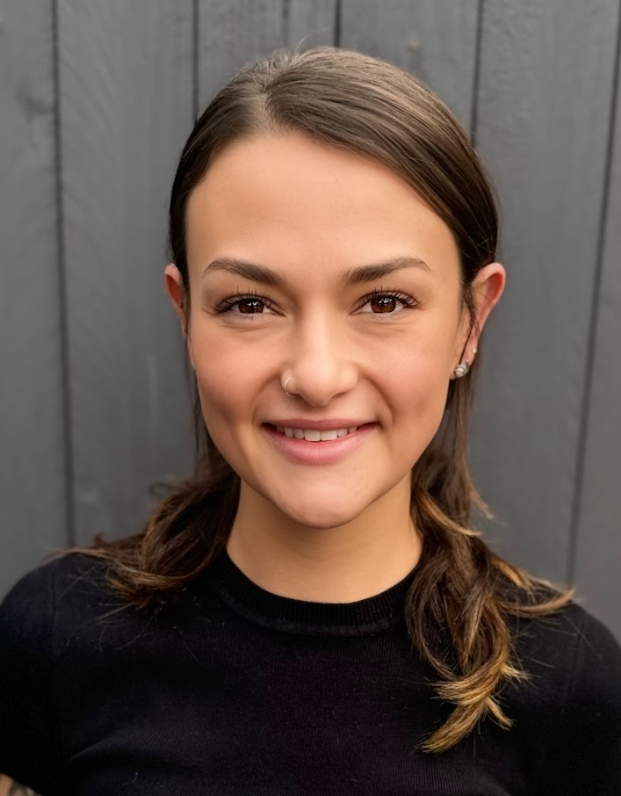
"Currently at full capacity. Not accepting new referrals at this time."
My name is Megan, but most people call me Megs. I'm originally from the United States and have lived in Sydney for over seven years—what began as a six-month trip quickly turned into home. I have a background in special education and nearly 15 years of experience in the disability sector.
I've worked in various roles throughout my career, including support work, teaching, SIL, Special Olympics coaching, early intervention, and behaviour support. I'm currently recognised as a Proficient Behaviour Support Practitioner under the NQSC capability framework and primarily support autistic adults with co-occurring conditions. I'm particularly passionate about SIL transitions and improving workplace inclusion for neurodivergent individuals. My practice is strengths-based, relationship-driven, and grounded in ongoing learning and growth.
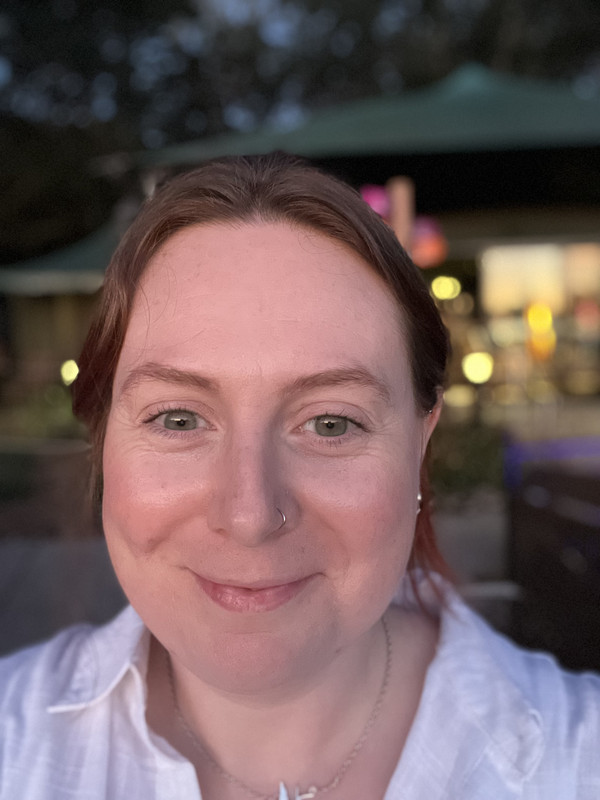
"Passionate about hospital-to-community transitions. Currently at full capacity."
My name is Hazel, I am originally from Yorkshire in the UK. I studied nursing at Northumbria University in Newcastle Upon Tyne. After graduating from university in 2012, I came out to Australia for what was intended to be a short stopgap, and I never went back!
I have worked in the healthcare and disability sector for 18 years, holding various roles across different settings and countries. I began my career in hospitals in the UK, working in various departments, including emergency care and palliative care. I have also worked in community settings, residential care facilities, hospitals, and secure psychiatric units in the UK, Australia, and New Zealand. After settling permanently in Australia in 2015, I managed Supported Independent Living models across Sydney before transitioning into a Behaviour Support Practitioner role in 2019.
I am currently a 'proficient' behaviour support practitioner under the NQCS capability framework. I support a variety of individuals; however, my specialist area is those with psychosocial disabilities and forensic histories. I am passionately committed to facilitating hospital-to-community transitions, promoting inclusivity, challenging stereotypes, and breaking down barriers for individuals living with disabilities. One of my mantras is "where there's a will, there's a way."

"Specialising in young adults with Level 3 autism and significant life transitions (SIL/STA). Currently at full capacity."
With 17 years of experience in the autism spectrum disorder (ASD) space, including extensive work at Giant Steps, I'm a dedicated Specialist Behaviour Support Practitioner. Since 2018, I've specialised in developing proactive and person-centred strategies, with a particular focus on young adults with Level 3 autism and moderate to severe intellectual disability.
My approach emphasises increasing or expanding a person's world through enhanced community access, diverse communication supports, a variety of personnel supports, and the development of a wide range of recreational skills. I have a strong interest in supporting individuals through significant life transitions, such as leaving school or moving into Supported Independent Living (SIL) or Short-Term Accommodation (STA), as well as navigating family and mental health crises. My goal is to ensure individuals have the tools and skills to thrive in their new environments.
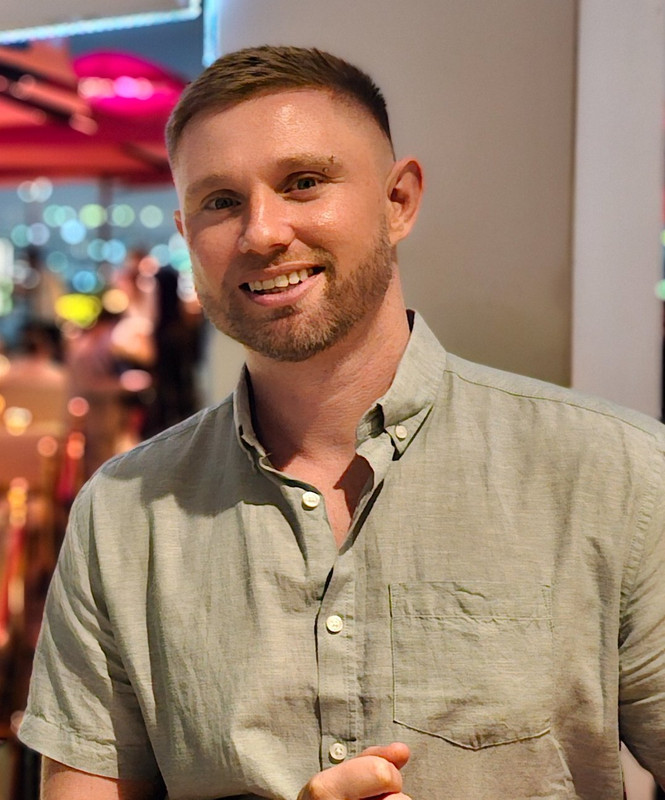
"My books are pretty much full, but might be open to new cases in the near future"
My name is David Horne and I am a Registered Psychologist with experience providing Applied Behaviour Analysis therapy with people with moderate to severe autism and ADHD. I have worked as a school psychologist helping young people with anxiety, emotional regulation, autism and ADHD.
I began working in the positive behaviour support space in 2019 and have worked with people of all ages with ASD (levels 1 to 3), intellectual disabilities (mild to profound), depression, anxiety, bipolar, aggression, communication difficulties, down syndrome, trauma, congenital rubella syndrome, and fragile X syndrome.

"Open to networking (selective). Available for specific holistic advocacy partnerships."
Hi, I'm Maddison! I believe that at the heart of every person’s journey is a desire to be valued and understood. With a background in psychology, social work, and disability, I’ve spent the last five years as a Behavior Support Practitioner focusing on exactly that - listening to what behavior is trying to communicate and helping people find easier ways to navigate their world.
I currently partner with individuals, families and support teams managing ASD, intellectual disabilities, neurological disabilities, complex psychosocial disabilities and mental health disorders. I know how important it is to have a steady, supportive advocate in your corner to help make today great and tomorrow even better. For me, it’s so much more than just behavior, it’s about quality of life and enjoying life to the fullest.
Outside of my practice, I enjoy unplugging and exploring all the corners of our beautiful country and beyond. I’m a scuba diver in summer, a snowboarder in winter, and a live music enthusiast all year round!

"My caseload is getting close to being full, but might be open to cases in the near future."
Hi my name is Pauline! A fresh new face in the Behaviour Support world. I am driven by a love for continuous learning. The focus is always on building strong, authentic relationships and working collaboratively, walking the same path alongside clients to reach their goals.
I am a core behaviour support practitioner who is currently focused on deepening expertise within Positive Behaviour Support to provide the highest standard of care and quality of life. When it’s time to unwind, downtime often consists of a highly relatable hobby: online "window shopping" and expertly filling up the cart without ever actually hitting checkout.
I would love to expand my knowledge and challenge myself more broadly within the disability and mental health sector. One of the quotes that resonates with me is “It is often the small steps, not the giant leaps, that bring about the most lasting change.” (Queen Elizabeth II)
Bringing over a decade of hands-on experience supporting young children and adults with Autism Spectrum Disorder (ASD) and Intellectual Disability (ID):
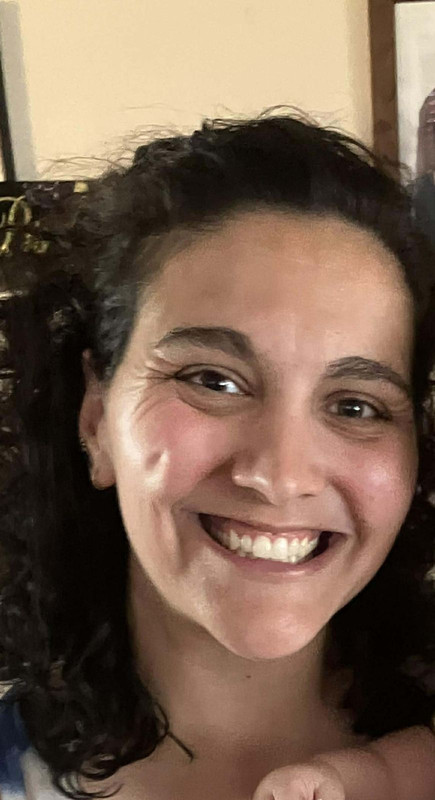
"I currently work part-time and may have more capacity in the near future!"
My name is Genevieve, but most people call me Gen. I am passionate about human services and behaviour support, bringing over a decade of diverse experience across the disability and statutory child protection sectors. Throughout my career, my practice has been anchored in the belief that everyone deserves fairness and dignity. I am deeply committed to evidence-based practice, using a collaborative, empathetic, and relationship-driven approach to support individuals, families, and key stakeholders.
My extensive background includes conducting complex risk assessments, designing tailored goal-oriented case plans, and authoring behaviour support plans. As a former Casework Specialist, I specialise in navigating complex multi-stakeholder systems, delivering targeted stakeholder coaching, and conducting comprehensive reviews of critical incidents. I am dedicated to empowering support teams through mentoring and high-quality clinical training to ensure coordinated, high-standard service delivery.
When I’m not working, you can usually find me spending quality time with my family and friends, travelling, or exploring the outdoors—whether that’s camping, 4WDing, or boating and skiing. I also love discovering new local breweries and wineries, and fun fact: I actually learned how to juggle back in high school!
Select the relevant service from the drop-down, play around with the calculator tool and check out the estimate (Please note, this is just an estimate, tailored services with limited resources can be achieved)
PRICE GUIDE: Improve Relationships 11_022_0110_7_3 and 11_023_0110_7_3. Important: We will attempt to work with the resources we have at hand, but the calculator gives you an idea of what best practice should look like in relation to time, resources and approach.
Notice: You have selected that Restrictive Practices are or might be present. Behaviour support Practitioners under the NDIS Rules 2018 are required to document these practices in an interim behaviour support plan within 30-days of the service starting.
Standard CBSP development pipeline applied directly across the first 6 months. We do NOT have compulsory NQSC legislative safeguarding requirements. Furthermore, deliverables are negotiable (e.g. we can produce the behaviour support resources in other media tailored for the person and/or stakeholders).
Delivered live by Lead Practitioner Chris Wood
Priced dynamically from $700 (discounted minimum) to $1,000 (standard maximum) per day.
Assessment Recommendation Therapy or Training Supports - Psychologist (01_701_0128_1_3): $252.98 phr AND /OR Assessment Recommendation Therapy or Training - Psychologist (15_054_0128_1_3): $252.98 phr
All psychology services are priced exactly as per the active **NDIS Price Guide** (capped standard rate at $252.98 per hour).
Psychologist assessment and direct support plans are subject to immediate clinical team availability review.
Proficient, Advanced, or Specialist Practitioners only
Exact allocations depend upon current practitioner capacities and individual clinical profile needs.
TOTAL EST. CLINICAL HOURS X 11_022_0110_7_3 AND 11_023_0110_7_3 RATE ($252.98)
We are in the process of building a FREE virtual educational framework designed specifically to raise the standard of care for managers, disability support workers, family members and more! Please stay tuned!
We are in the process of developing some positive behaviour support content. We will be releasing the content free to website visitors (powered by Learn Worlds).
Explore our curated collection of clinical insights, workplace strategies, and industry reflections. To see our full library or access our accessible policy documents, use the portals below.
Insights and takeaways from the international conference, exploring the intersection of culture, technology, and clinical practice.
Practical strategies for practitioners navigating the digital landscape to maintain energy, focus, and clinical effectiveness.
A deep dive into career progression within the disability sector and how to actively manage your professional development.
Why breaking down silos and collaborating across different service providers is the key to elevating sector-wide standards.
Exploring the responsible integration of artificial intelligence tools in clinical settings without compromising participant privacy.
Examining the systemic challenges of retention in the disability sector and its direct impact on continuity of care.
Pursuant to NDIS quality obligations, you may log feedback entirely anonymously or provide your details for follow-up. All submissions are audited bi-weekly by our senior leadership team.
Please click on the topic below to open CWC's position.
At CWC Behaviour Support, we treat Artificial Intelligence as a collaborative tool, not a rogue content generator. Our clinicians operate under a strict Ethical AI Policy and receive ongoing training to ensure AI is used responsibly. We do not use "set and forget" systems; every piece of AI-assisted work is critically reviewed and verified by a human practitioner. We believe in total transparency with our clients, including the fact that we collaborated with Gemini to help draft this very section of our website!
Written by: Chris Wood
At CWC Behaviour Support, we explicitly align our clinical practice with the contemporary Positive Behaviour Support (PBS) framework collated and clarified by Fisher, Louise, and Reschke (2024), which builds upon foundational international frameworks established by Gore et al. (2022) and Kincaid et al. (2016). Rather than viewing behaviour support as a loose collection of reactive strategies, we structure every single Behaviour Support Plan around three uncompromisable pillars:
• Fisher, A., Louise, K., Reschke, K., et al. (2024). Positive behaviour support under the National Disability Insurance Scheme in Australia: barriers, enablers and support needs from the perspective of practitioners. Australian Journal of Social Issues, 00, 1-19. • Gore, N. J., Sapiets, S. J., Denne, L. D., et al. (2022). Positive behavioural support in the UK: a state of the nation report. International Journal of Positive Behaviour Support, 12(1), 4-39. • Kincaid, D., Dunlap, G., Kern, L., et al. (2016). Positive behavior support: a proposal for updating and refining the definition. Journal of Positive Behavior Interventions, 18(2), 69-73.
Written by: Megan Friedman
At CWC, our ultimate measure of success is obsolescence. In other words, we want to work ourselves out of a job. We believe that effective behaviour support isn't about creating lifelong dependency; it's about building capacity, fostering resilience, and equipping individuals and their teams with the tools they need to thrive. Sometimes the need for support decreases; other times it remains, but the reliance on external practitioners disappears. Either way, the goal is the same: to fade our own involvement as the people around someone grow into it, so that good support keeps showing up long after we've stepped back.
Written by: Chris Wood
At CWC, we deliberately reject the traditional, top-down approach to clinical supervision. We believe through lived experience that the depth of conversation, quality of reflective practice, and the rich bouncing of ideas generated by a collective group yields far greater results for our participants than standard one-to-one arrangements. To achieve this, our practitioners engage in fortnightly peer-to-peer (P2P) clinical supervision for three to four hours. We value our participants' privacy and promote maximum dignity throughout this process, sharing only the information necessary to explore the case robustly and clinically.
Our collaborative P2P sessions are highly structured into four distinct sections to ensure no detail is missed:
While our primary framework relies on the power of the collective group, we also recognise that complex situations occasionally require targeted, individualised input. At CWC, we match specific clinical needs to specific skill sets. If a practitioner is navigating a developing situation that requires a specialist lens, they can immediately book a one-to-one consultation with an in-house expert, such as a registered psychologist, to leverage their specialised systems knowledge. Furthermore, we actively encourage organic collaboration outside of formal meetings. From our office in Castle Hill, our practitioners regularly co-habit the space to bounce ideas around in real time. This cross-pollination of expertise allows us to generate solutions rapidly, share resources to streamline next steps, and remain highly efficient with participant funding, ultimately maximising our positive impact.
Written by: Chris Wood
At CWC, our priority is delivering high-quality behaviour support, not chasing paperwork. We recognise that NDIS plan nominees already shoulder a mountain of administrative tasks in their roles. To actively reduce this burden, we have introduced an opt-out service agreement policy for services under the NDIS PACE model, provided we have at least one signed service agreement on file from our initial engagement. Each year, we send an opt-out service summary to the nominee as a clear, simple reminder of the deliverables, goals, and their absolute right to opt out or cancel services at any time. For families who prefer a more traditional approach, we are always happy to provide a standard, signed annual service agreement upon request.
This streamlined policy directly reflects recent operational feedback from the NDIA regarding the PACE rollout. The Agency highlighted that under the PACE model, a nominee's verbal endorsement given directly to the NDIA carries more weight than a signed service agreement, essentially making repetitive, annual signed contracts redundant. At CWC, we will always push to make the NDIS ecosystem more efficient and less burdensome for the families we support. By cutting out unnecessary bureaucracy, we ensure our practitioners spend less time completing administration and more time on what actually matters: improving quality of life.
Written by: Chris Wood
At CWC, we operate as a dedicated small business of fewer than ten people. Each of our practitioners builds and shapes their own caseload, often operating as a sole trader contractor under the CWC model of Positive Behaviour Support. Within the contracting landscape, there is a known tendency for professionals to avoid taking planned leave or sick days due to the immediate loss of income and the reality that a traditional corporate safety net does not exist. We recognise that this lack of time away can quickly lead to practitioner burnout, which ultimately impacts the quality of clinical care. To counter this, we actively encourage our team to take at least four weeks of planned leave throughout the year to rest and recharge their batteries.
While our practitioners are fully responsible for managing their caseload expectations, including compliance deadlines, plan expiries, and non-negotiable commitments, we have established a skeleton service arrangement to support them. This arrangement ensures our team can step away guilt-free while maintaining a baseline of continuity for our ongoing clients.
When a practitioner plans to take leave, the process is straightforward:
We openly acknowledge that a skeleton service is not a perfect, full-time replacement for a primary clinician. However, it is a practical and vital safety net that supports the continuity of critical services while protecting the mental health of our workforce. When our practitioners are well-supported and rested, they deliver significantly better quality-of-life outcomes for the individuals we serve.
Written by: Chris Wood
At CWC, we actively promote a dual allocation model for new participants being onboarded into our service. This approach does not change our absolute commitment to finding the perfect clinical fit. We pre-screen every referral and will always consult with the NDIS plan nominee or the participant before a service agreement is signed. We believe in giving the individual the ultimate power to say yes or no based on our experience and what we bring to their life. Following highly successful pilots across 2024 and 2025, we have seen incredible clinical traction with this model over the past twelve months. Under this framework, we assign both a primary lead practitioner and a secondary practitioner to collaborate in delivering the service.
We want to be entirely transparent: we do not double-bill for our time. Instead, we split the allocated funding efficiently between the two clinicians to maximise productivity by having them complete separate tasks simultaneously. For example, during a single site visit, one practitioner might conduct a comprehensive risk assessment while the other interviews support staff and the participant. This collaborative teamwork directly benefits our clients in several vital ways:
As with everything we do at CWC, choice and control remain at the forefront. We offer the dual allocation model as an option during the initial service intake stage. If it is something a family does not want, or if they feel a single clinician would be a better fit, we are always happy to provide a traditional, single-practitioner arrangement instead.